
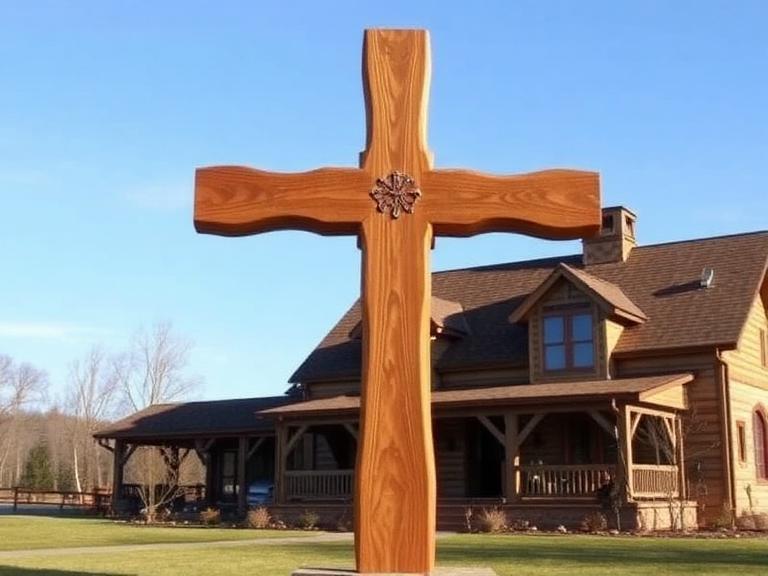
Choosing a Christian cross as a symbol for your home or lawn is a meaningful way to express faith and invite others to encounter Christ. The design, material, and dimensions should reflect reverence while still feeling intentional and beautiful. Below are biblical principles, practical considerations, and creative suggestions to guide your choice, infused with warmth and description to help you visualize and feel connected to it.
Table of Contents
1. Dimensions Matter: Size, Proportion, and Proportionality
The size of the cross should be intentional—neither too small to ignore nor so large it becomes an imposing landmark. Think of it as a quiet witness to faith, not an overt proclamation (though some churches intentionally use oversized crosses for visibility and impact).
Common Guidelines for Outdoor Crosses:
- Ground or Lawn Crosses:
- Height: Typically, a 6–8-foot-tall wooden or metal cross is ideal for lawns (depending on yard size). For smaller yards, a 4–6-foot cross feels proportionate.
- Width at the Top (Arm Span): About 1/3 to 1/2 the height of the upright (e.g., a 6-foot cross might have arms that are 2–3 feet wide).
- Materials: Weather-resistant woods (cedar, redwood), galvanized steel, or bronze. Avoid paint that might chip; consider stainless steel or powder-coated metal for longevity.
- Window Box or Porch Crosses:
- Height: 12–24 inches tall (small enough to complement flower boxes or porch decorations without overpowering them).
- Design: Simple and elegant, often a Latin or Greek cross to blend with home decor.
- In-Ground Monuments:
- Size: If it’s a permanent feature, consider 2–4 feet tall with a sturdy base (like a slab of stone or cement).
- Depth: Ensure it’s bolted into the ground for stability.
2. Design Styles: Symbolism and Aesthetic
The shape and style of the cross carry deep biblical and spiritual significance. Some popular options:
A. Latin Cross (Standard Western Cross)
- Biblical Roots: Predominantly used in Christian tradition since the Early Church (e.g., where Jesus was crucified on a patibulum – a horizontal crossbar).
- Symbolism: Represents sacrifice, redemption, and hope. The angled top symbolizes Christ’s head bowed in death (though the shape later became conventional).
- Why It Works: Familiar, dignified, and universally recognized by visitors.
B. Greek/Lithurgical Cross
- Design: Longer vertical bar with equal-length arms, with three small notches (representing the nails or wounds).
- Symbolism: Older design (pre-Council of Laodicea, ~325 AD) emphasizing Christ’s full humanity (the notches remind believers of the wounds).
- Why It Works: Unique, less conventional, great for those wanting something distinct.
C. Lutheran Cross (Long Vertical Bar, Short Horizontal)
- Design: Vertical bar extends higher than the horizontal arm (sometimes with the Christus Vincit inscription – “Christ Conquers”).
- Symbolism: Reflects Lutheran belief in Jesus’ ascension and victory over sin/death.
- Why It Works: A quiet, understated faith mark for Lutheran readers.
D. Metalwork or Ornate Crosses
- Examples: Ironwork, filigree, or religious icons (Mary holding Christ, pelican feeding chicks, etc.).
- Symbolism: Represents sacrifice, protection, or divine grace depending on design.
- Why It Works: Stunning for front lawns or gardens, especially with flowering vines (roses, clematis) wrapped around them.
E. Hidden or Minimalist Crosses
- Examples: Inlaid into a garden path, a subtle stone marker with a cross outline, or a tree planting with the shape of a cross.
- Symbolism: Suggests faith woven into life, not flaunted.
- Why It Works: Welcoming to neighbors and friends unsure how to respond to bold displays.
3. Materials: Practical and Spiritual Considerations
The choice of material should reflect both longevity and the feeling of faith it evokes.
| Material | Longevity | Maintenance | Spiritual/Visual Feel |
|---|---|---|---|
| Cedarwood | 20+ years (if treated) | Needs occasional sealant | Warm, natural, “fragile beauty” like Christ’s mortal life |
| Redwood | 15-30 years | Low maintenance | Elegant, with a slightly weathered charm over time |
| Stainless Steel | Lifetime | None (rust-resistant) | Sleek, modern, “eternal hope” |
| Bronze | 30+ years (oxidizes patina) | None | Timeless; develops a “blessed” antique glow |
| Marble/Granite | Forever | Sealing to prevent cracking | Sacred, durable; like a stone reminder of endurance |
| Wrought Iron | 20+ years | Paint touch-ups to prevent rust | Old-world craftsmanship, “roots in tradition” |
4. Lighting for Visibility and Peace
If the cross has to be visible (and meaningful) at night:
- Solar-powered uplighting: Gently illuminates the top to look like a halo, emphasizing divine presence.
- LED fairy lights: Drape around branches of a metal cross or a wooden one for a serene glow.
- Spotlights: Focused beams on the top to symbolize God’s light “piercing darkness.”
5. Placement for Symbolic Depth
Your cross’s location tells a story about where faith fits into your home:
- Front Porch/Entry: Welcomes visitors to a place of grace. Use a smaller cross in a window box with flowers or a simple upright on a stone.
- Lawn Centerpiece: A tall wood or metal cross planted at the base of a flowering shrub like a weeping willow or holly bush.
- Over a Driveway or Walkway: Align the cross along the line of walkway steps for a pilgrim’s path leading to home.
- Garden or Rose Arbor: Let ivy or roses grow around a Lithurgical or Greek cross for a “garden of Gethsemane” feel.
6. Spiritual Anchors: Pairing the Cross with Nature or Art
To deepen the meaning, pair the cross with elements that mirror biblical stories or themes of life and hope:
- Fountain or Water Feature: “Live by the Spirit” (Galatians 5:25). Even a small tiered fountain near a cross symbolizes the water of life (Revelation 22:17).
- Bird Feeders: “Consider the birds of the air… your Father provides” (Matthew 6:26). A cross above a bird feeder invites reflection on trust and provision.
- Winding Path with Stone Markers: Use small cross stones to guide visitors (like Jacob’s ladder, Genesis 28:12).
- Wine Vines or Grapes: Allude to the “new wine of the kingdom” (Mark 2:22).
7. Storytelling Through Design: Embedding Scripture
If you’d like your cross to “speak” without words:
- Engraved or Inscribed: Consider a one-sentence verse or phrase:
- “Greater love has no one than this: to lay down one’s life” (John 15:13).
- “In Christ I have become a new creation” (2 Corinthians 5:17).
- Emblematic Images: A pelican feeding her young (for resurrection), a lamb (John 1:29), or a harrow (symbol of the Cross).
- Color: Red enamel paint for blood/wounds (if metal), gold or silver for royalty.
8. Inviting Conversation
If you’d like your cross to be a starting point for faith discussions with neighbors:
- Simple but bold design: Not hidden or overly ostentatious, but clear as a Latin cross.
- Accompany it with a sign: A QR code linking to your faith story, a kind note (“May this remind you of love that lasts”), or a question (“What do you think when you see this?”).
- Seasonal changes: Tie it to harvest (Psalm 23:6, “goodness and mercy”) in autumn, or resurrection in spring.
Prayer Over Your Future Cross
As you plan, here’s a way to make it personal:
“Loving God, this cross is more than a piece of metal or wood. Help it be a tangible reminder—when the weather sways it [if wood], when the light reflects off it [if metal], when visitors pause [if well-placed]. Make it a whisper of Your love where it would otherwise be unnoticed. Amen.”
Our Recommendations
- Best for Beginner: A 6-foot cedarwood Latin cross set in the ground near a pathway, lightly stained to weather naturally. Simple, quiet, and full of intention.
- Best for Tradition: Bronze or wrought iron Greek Cross on a pedestal with a fountain in the front garden.
- Best for Conversation Starters: Small stained-glass cross in a window box with a label like “I don’t have all the answers, but I’ll always pray for you.”
- Best for Visibility and Hope: 20-foot metal cross on a hilltop or overlooking a valley (like the Transfiguration scene, Matthew 17:1–8), with solar lighting.
🕯 Does this article inspire you?
Do you like to share within the community your experiences, thoughts and questions?
So please leave us a comment below – thank you.
